

The All‑New Renault Duster makes a strong comeback with a modern three‑engine lineup designed to suit a wide range of driving needs — from everyday city use to performance‑oriented cruising and efficient long-distance travel. Renault has moved away from diesel for this generation and instead offers three petrol-based powertrains: a compact 1.0‑litre turbo petrol, a more powerful 1.3‑litre turbo petrol, and a strong hybrid E‑Tech 160 system that represents the brand’s latest hybrid technology in the SUV segment.At the entry level sits the 1.0‑litre turbocharged petrol engine, often referred to as the TCe 100.
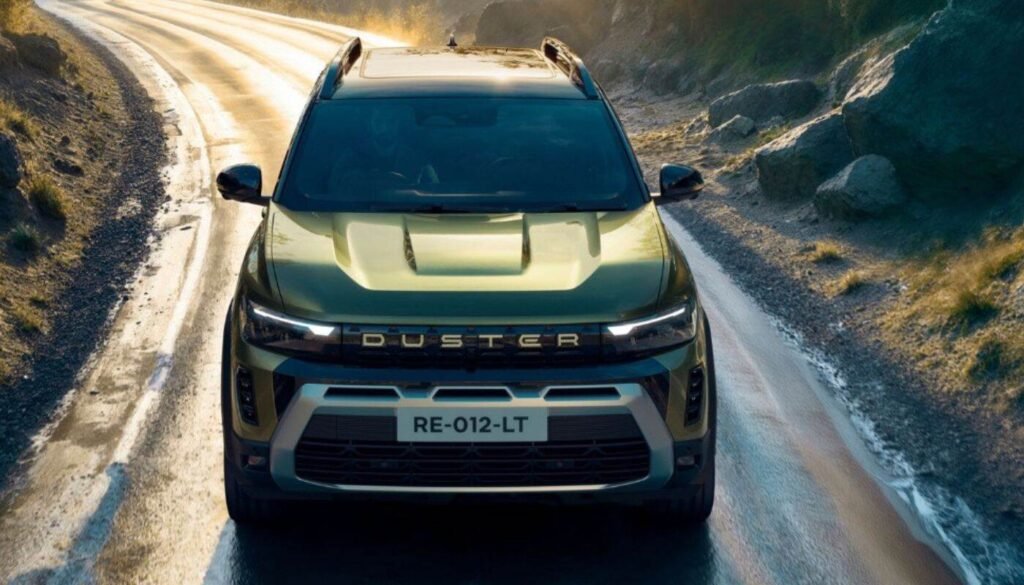
This three‑cylinder unit produces roughly 100 bhp and 160 Nm of torque, offering balanced performance for daily driving and urban commutes. Its relatively compact size and turbocharging help provide responsive acceleration while maintaining good fuel efficiency. For this engine, Renault pairs a six‑speed manual transmission, ensuring simplicity and affordability for budget-focused buyers.
Stepping up the range is the 1.3‑litre turbo petrol engine, known as TCe 160. With around 160 bhp and 280 Nm of torque, this four‑cylinder unit delivers a significant jump in power and mid-range punch, making it suitable for highways and more demanding driving conditions. It’s offered with both a six‑speed manual gearbox and a six‑speed dual-clutch automatic, giving buyers more choice between sporty control and effortless cruising.The standout powertrain in the new Duster lineup is the Strong Hybrid E‑Tech 160. Unlike the other engines, this system combines a 1.8‑litre petrol engine with two electric motors and a 1.4 kWh battery pack, forming a dedicated hybrid transmission (DHT).
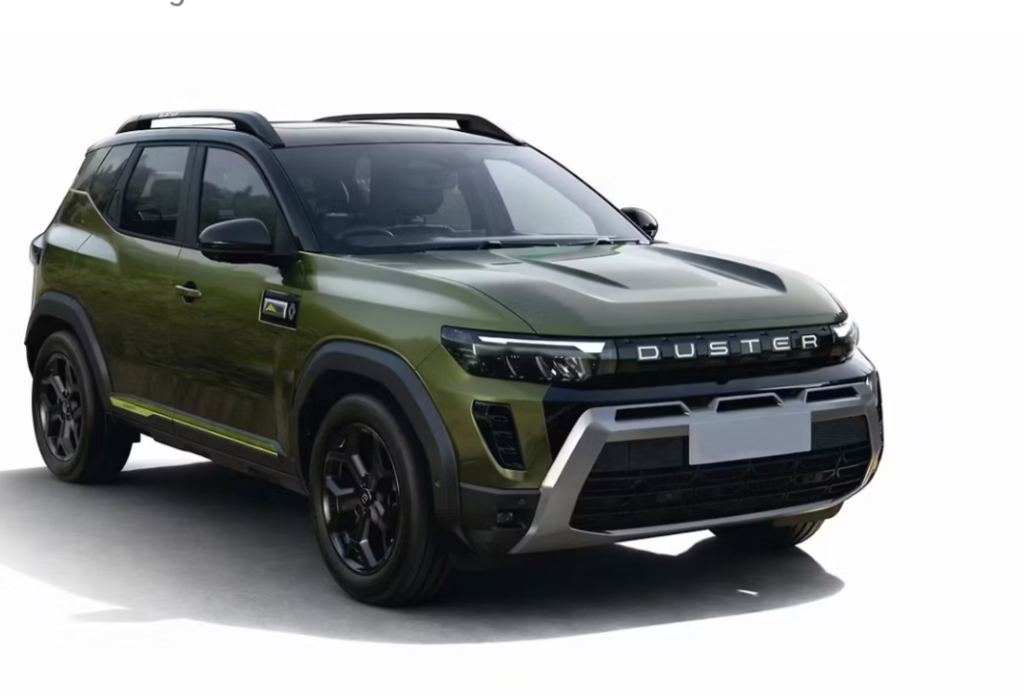
The hybrid setup delivers a combined output of about 160 bhp and 172 Nm, and because of its electric assist, the SUV can operate in pure electric mode for a significant portion of city driving — Renault claims up to 80 % EV mode in urban conditions. This integration improves both fuel efficiency and refinement compared to conventional petrol engines.
Technically, the hybrid E‑Tech doesn’t just increase efficiency — it also alters how the vehicle behaves. The dual electric motors allow seamless transitions between electric-only, petrol-only, and combined power delivery. Regenerative braking helps recharge the battery under deceleration, reducing the load on the petrol engine and enhancing real-world economy.
A dedicated hybrid transmission smooths out gear changes without the typical shift feel of conventional automatics, contributing to a refined driving experience that passengers feel in everyday use.Together, these three options — the 1.0 L turbo for efficiency and value, the 1.3 L turbo for performance, and the strong hybrid for cutting-edge efficiency and smoothness — give the new Renault Duster broad appeal. Buyers can choose based on priorities like budget, driving style, or fuel economy, while the hybrid variant positions the Duster as a forward-looking choice amid rising demand for electrified powertrains in the compact SUV segment.

